

What if the best PPF choice isn’t the most coverage, but the coverage that suits how you drive? If you’re researching car paint protection film South Africa, it’s natural to wonder what the film can realistically guard against, whether it will alter your paint’s appearance and how much protection your car needs.
Those are sensible questions. PPF is a protective layer designed to help shield paint from stone chips, scratches and environmental damage, not a promise against every mark or impact. The right decision starts with your vehicle’s use and exposure, then balances practical protection with the finish you want to preserve.
This guide explains what PPF can and can’t protect, how to compare focused and broader coverage, and what to expect from professional installation. You’ll also learn how film may look on the paint and why preparation matters. ESP provides precision PPF installation for luxury and exotic vehicles, as part of a considered approach to vehicle care.
Key Takeaways
- Understand what paint protection film is designed to shield against, and why it shouldn’t be treated as protection from every impact.
- Learn how film characteristics and finish can influence the way PPF looks and behaves on your car.
- Use your vehicle’s driving habits, exposure and priorities to weigh focused coverage against broader protection.
- See what to expect during professional installation, including why the condition of the existing paint matters.
- Discover how car paint protection film South Africa can support considered vehicle care through precision installation for luxury and exotic vehicles.
What Is Car Paint Protection Film in South Africa, and What Does It Protect?
Paint protection film (PPF) is a clear or finish-altering film applied over a vehicle’s painted surfaces to help reduce direct exposure to everyday damage. It sits above the paint as a sacrificial layer, taking some wear in place of the finish beneath it.
For drivers researching car paint protection film South Africa, the key point is its role: PPF helps preserve paint, but it isn’t armour. It can reduce the likelihood or visibility of certain surface marks, but results depend on the force involved, the areas covered and how the vehicle is used. No film can promise a flawless finish indefinitely.
How PPF differs from a vehicle’s paint finish
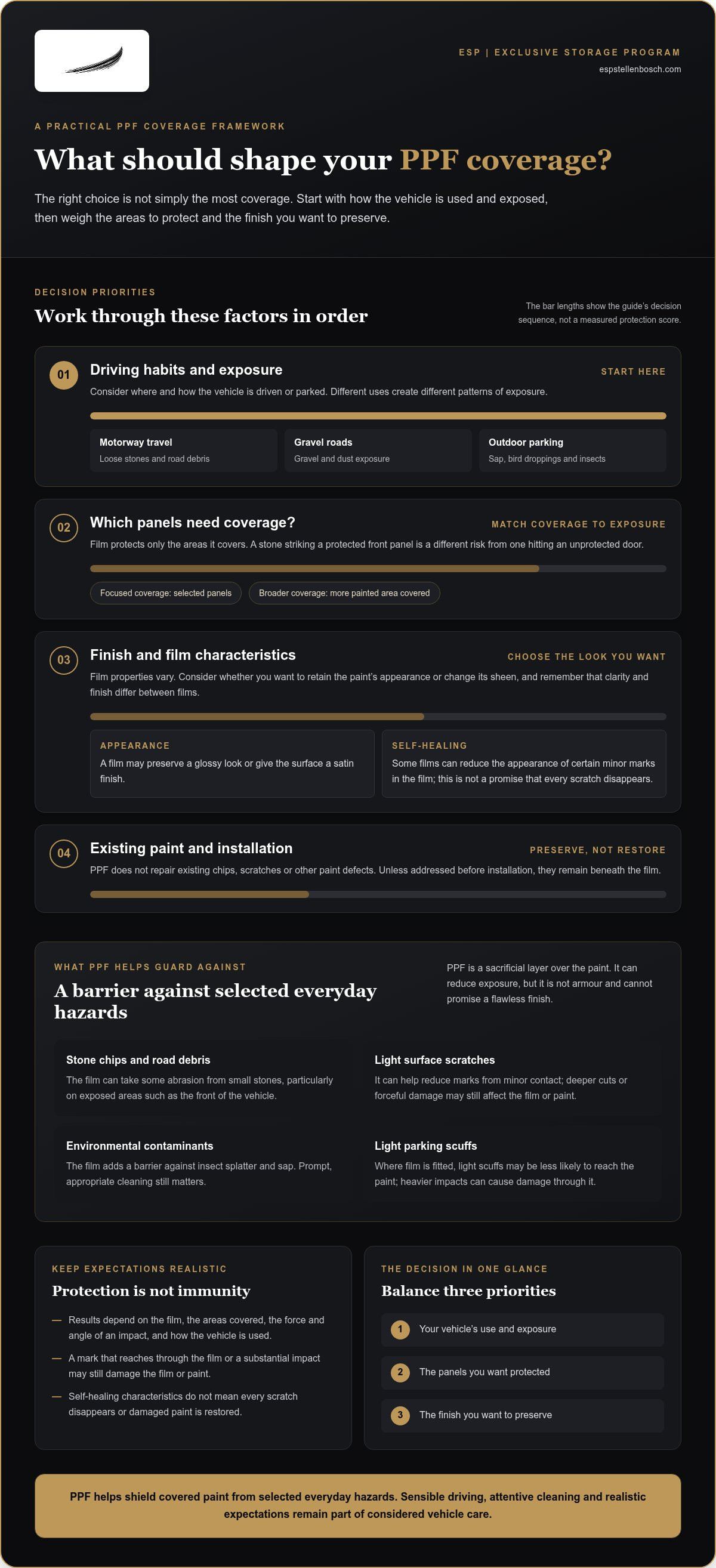
Paint gives the vehicle its colour and appearance. PPF is a separate layer fitted over selected panels or a broader area to help protect them. It doesn’t repair chips, scratches or other defects already in the paint. Unless addressed before installation, those remain beneath the film.
Think of PPF as preservation, not restoration. Its purpose is to help shield the existing finish from some new surface hazards. It can’t ensure that the vehicle will remain mark-free, and only the covered areas receive the film’s protection.
Which risks does paint protection film address?
PPF is intended to help guard against common sources of surface wear. On South African roads, a vehicle may encounter gravel or loose stones on longer routes, debris near roadworks and dust on unpaved roads. Paint can also be exposed to insect residue, bird droppings and tree sap while driving or parked outdoors.
- Stone chips: The film can take some abrasion from small stones and road debris, particularly on exposed areas such as the front of the vehicle.
- Light surface scratches: PPF can help reduce marks from minor contact, though deeper cuts or forceful damage may still affect the film or paint.
- Environmental exposure: The film adds a barrier between paint and contaminants such as insect splatter or sap. Prompt, appropriate cleaning still matters.
- Parking-related contact: Light scuffs may be less likely to reach the paint where film is fitted, but heavier impacts can cause damage through it.
Coverage matters. A stone striking a protected front panel presents a different risk from one hitting an unprotected door. Regular motorway travel, gravel-road use and open-air parking also create different patterns of exposure. The severity and angle of an impact affect what the film can withstand.
PPF helps shield covered paint from selected everyday hazards. It reduces exposure, but cannot prevent every scratch, chip or impact. Film can support careful vehicle preservation, but it doesn’t replace sensible driving, attentive cleaning or realistic expectations.
How Paint Protection Film Works: Materials, Finish and Realistic Limits
Paint protection film creates a physical layer between the vehicle’s finish and some of the contact or contaminants it encounters. Its behaviour depends on the film’s construction and the quality of its fit. PPF is a category, not a single uniform material: thickness, surface properties, clarity and finish can vary. A specification or performance claim for one film shouldn’t be assumed to apply to every product.
That distinction matters when comparing options for car paint protection film South Africa. One film may be designed to preserve a glossy appearance, while another may give the surface a satin look. Clarity can vary too. The result depends on the film, the paint beneath it and the precision of installation. Focus on the intended finish and your protection needs rather than assuming every film has the same properties.
What self-healing means in everyday use
Some PPF has a self-healing surface that can reduce the appearance of certain minor marks in the film. It doesn’t mean every scratch disappears, or that the film restores damaged paint. A deep cut, substantial impact or mark that reaches through the film is beyond what the term promises. For a closer explanation of the feature and its limits, see the dedicated guide, “How Self-Healing Paint Protection Film Works”.
What PPF can and cannot promise
Film is intended to reduce exposure, not make a vehicle immune to damage. Its contribution depends on the specific film, the panels covered and what happens to the car. A light surface mark on a protected area is different from a forceful impact, while an uncovered panel has no film barrier. Even well-fitted film cannot guarantee that the paint beneath it will remain untouched in every circumstance.
Read claims in context. A film’s stated finish or self-healing behaviour describes a characteristic of that product, not a guaranteed outcome for the whole vehicle. Nor should a feature listed for one film be treated as a category-wide standard. The practical question is how the selected film’s properties align with the finish you want and the risks you’re looking to manage.
- Finish: Consider whether you want to retain the paint’s existing appearance or alter its sheen.
- Coverage: Remember that film only protects the areas to which it is applied.
- Expectations: Treat protection and self-healing as helpful characteristics, not promises that all marks will disappear.
ESP’s precision installation uses self-healing films designed to help shield luxury and exotic vehicle paint from chips, scratches and environmental exposure. To learn more about the process, explore ESP’s paint protection film installation.
Choosing PPF Coverage for Your Car: A Practical Comparison Framework
There isn’t one coverage plan that suits every vehicle. A car driven daily on motorways faces a different pattern of exposure from one used occasionally and kept in careful indoor storage. When considering car paint protection film South Africa, start with the vehicle’s routine, then decide which areas and finish priorities matter most to you.
Match the coverage approach to how you use the vehicle
Focused coverage places film on selected, higher-exposure areas, often at the front of the vehicle. Broader coverage extends protection across more painted panels. Focused coverage concentrates on areas more likely to encounter road debris; broader coverage may suit owners who want more of the vehicle’s paint protected. Neither approach removes the possibility of damage.
Use the comparison below as a starting point, not a prescribed package. The precise panels included depend on the coverage selected and the vehicle.
| Coverage approach | Vehicle use and exposure | Owner priorities |
|---|---|---|
| Focused coverage on selected high-exposure areas | Regular road use, longer drives or frequent travel where the front of the vehicle is more exposed to debris. | Prioritising protection in specific areas while retaining the existing appearance across most panels. |
| Broader coverage across more painted panels | Frequent use across varied routes, or a vehicle whose owner wants more of its painted surface covered. | More extensive surface coverage and a consistent approach across a larger area. |
| Coverage planned around occasional use or careful storage | Fewer journeys may mean less road exposure, though outings, handling and outdoor parking can still affect the finish. | Balancing reduced day-to-day exposure with the value placed on preserving particular panels. |
Storage changes the pattern of use, not the basic decision. A vehicle kept indoors for long periods may encounter fewer road hazards, while the areas exposed during occasional drives can still matter. Consider how often the car leaves storage, where it’s parked on outings and which surfaces you most want to preserve.
Questions to resolve before selecting coverage
Before settling on an approach, clarify your priorities. Is your main concern stone chips, light surface marks or environmental exposure? Which areas are most likely to face those risks in your routine? Is the existing paint in the condition you want to preserve, and how long do you expect to keep the vehicle? Your answers help make coverage a considered choice rather than a reaction to a headline claim.
Appearance matters too. Decide whether you want the film to maintain the paint’s current look or whether a different finish would suit your preference. Discuss how the proposed coverage will sit across visible panels, including the transition between protected and unprotected areas.
PPF and ceramic coating serve different roles, so they shouldn’t be treated as interchangeable. If you’re weighing both, a dedicated PPF-versus-ceramic-coating comparison can help clarify how each fits your priorities. The aim isn’t maximum coverage by default, but a thoughtful match between the vehicle’s use, its finish and the protection you value.
Preparing for PPF Installation: What the Vehicle Owner Should Expect
A considered PPF installation begins before the film reaches the paint. The vehicle’s condition, your priorities and the areas selected for coverage all inform the process. Knowing what happens at each stage helps you arrive prepared and understand what to expect at handover.
Before the vehicle goes in
Before the appointment, decide which risks matter most to you and which areas you want to prioritise. Make a note of visible chips, scratches or other concerns, and mention any previous paintwork or repairs. The existing finish informs the assessment and preparation. Film is applied over the surface, so don’t assume it will correct defects beneath it.
The installation journey
Each vehicle and coverage plan is individual, but a professional installation generally follows a considered sequence:
- Discuss priorities. Share how you use the car, the coverage you have in mind and any concerns about the paint or appearance. This helps clarify the intended scope.
- Assess the vehicle. The installer examines the selected panels and their existing finish. This informs preparation and highlights conditions that may affect how the film sits over the paint.
- Prepare and apply the film. The vehicle is prepared for installation, then the film is carefully positioned on the agreed areas. Precision matters: the film needs to follow the contours of each panel and align with the chosen coverage.
- Review the work at handover. Take time to understand what has been covered and how to care for the film. The installation team can provide guidance suited to the film and work completed.
Your role is straightforward but valuable. Be open about the finish you want to preserve, the vehicle’s history and how it’s used. If you’re uncertain about an area of coverage, raise it before installation so the scope can be discussed clearly. Follow preparation requests and aftercare instructions provided by the installation team, as these can depend on the film fitted.
Handover and early care
At collection, look over the installed areas with the team and listen to the care guidance for your vehicle. Instructions can depend on the film and installation, so don’t assume washing times or methods are identical for every product. If you notice something that concerns you, point it out promptly and discuss the appropriate aftercare response.
This measured handover is part of the installation journey, not an afterthought. ESP provides precision PPF installation for luxury and exotic vehicles, using self-healing films designed to help shield paint from stone chips, scratches and environmental damage. Find out more about ESP’s precision PPF installation.
ESP Paint Protection Film: Precision Installation for Considered Vehicle Care
Choosing coverage is only part of a considered approach to paint preservation. The quality of the installation and the care taken with the vehicle’s finish matter too. ESP provides precision PPF installation for luxury and exotic vehicles, using premium self-healing films designed to help shield paint from stone chips, scratches and environmental exposure.
A considered approach to paint preservation
PPF adds a protective layer over selected painted surfaces. It helps maintain the finish by taking some everyday wear in place of the paint beneath it. It isn’t a promise that the vehicle will remain untouched, and it doesn’t remove existing paint damage. Understanding these limits is part of making an informed decision about vehicle care.
ESP’s installation service is centred on precision. Coverage can be considered in relation to how the vehicle is driven, where it is exposed and which areas matter most to you. A car used regularly on open roads may prompt different priorities from one driven occasionally. The aim is to match protection to the vehicle, rather than assume more coverage is automatically the right answer.
Self-healing film is part of ESP’s offering. The term refers to the film’s ability to reduce the appearance of certain minor marks in its surface; it doesn’t promise that deep cuts, significant impacts or paint damage will disappear. Film characteristics can vary, so understand the selected film’s intended behaviour alongside the finish you want to preserve.
For owners of luxury and exotic vehicles, that distinction helps keep expectations clear. PPF is one element of looking after a valued car. It can help shield the paint and support preservation of its finish, while careful use and ongoing care remain part of ownership. No installation can guarantee a particular resale value or prevent every kind of damage.
Taking the next step with ESP
Before proceeding, consider the vehicle’s use, your main protection concerns and the areas you most want to preserve. Bring those priorities into the conversation about coverage and finish. A clear understanding of what matters to you helps shape a considered installation plan.
If you’re exploring car paint protection film South Africa for a luxury or exotic vehicle, learn more about ESP’s precision PPF installation.
Make Paint Preservation Part of Your Ownership Plan
Choosing car paint protection film South Africa is best approached as a decision about how you want to care for your vehicle over time. Set down what matters most: the finish you want to retain, how the car is used and the level of coverage that feels appropriate. A clear brief makes the conversation more focused and helps bring your priorities into the installation plan.
Protection continues beyond installation. Treat the film as one part of attentive ownership, alongside careful cleaning and noticing changes to the vehicle’s surface. Keep the installation team’s guidance close and raise any concern early. Considered habits help you care for the finish without expecting film to make the car impervious to wear.
For a luxury or exotic vehicle, precision matters. ESP brings a considered approach to PPF installation and paint preservation. Explore ESP’s precision PPF installation and take the next step in caring for your vehicle.
Frequently Asked Questions
Is paint protection film worth it for a luxury car?
Yes, PPF can be worth considering if preserving a luxury car’s painted finish is a priority. For owners considering car paint protection film South Africa, ask whether the areas most exposed during regular use justify the coverage. Think about your usual routes, parking and ownership plans, then weigh those factors against the finish you want to maintain. PPF can support careful ownership, but it can’t guarantee flawless paint.
Can paint protection film prevent all stone chips and scratches?
No, PPF can’t prevent every stone chip or scratch. Small road debris may affect the film differently from a forceful impact, and an uncovered panel has no film barrier. If a mark appears, consider where it is, how extensive it seems and whether the film itself is affected. Don’t treat PPF as a reason to drive closer to debris or overlook routine care.
How long does paint protection film last?
There isn’t one lifespan that applies to every film installation. The film selected, how it’s fitted, the vehicle’s exposure and its care can all influence how it wears over time. For a realistic expectation, rely on guidance for the specific film installed rather than figures quoted for a different product. Inspect the covered panels periodically and follow the care instructions provided for your vehicle.
Can paint protection film be installed on a used car?
Yes, a used car can be considered for PPF, provided its existing surface is assessed first. An older vehicle may have stone marks, repaired panels or paintwork that differs from one panel to another. Mention anything you know about the car’s history, including previous resprays. This gives the installation team useful context when assessing the finish and discussing preparation before film is applied.
Is paint protection film visible once it is installed?
It can be, depending on the film, paint colour, lighting and application. A film may be less noticeable in some conditions than others, so “invisible” shouldn’t be taken to mean undetectable from every angle. Before installation, discuss the appearance you want and how the selected coverage may look across panel edges. At handover, examine the vehicle in good light and raise any visible concern with the installation team.
Can paint protection film be applied to headlights as well as paintwork?
Headlight coverage depends on the film and the surfaces included in the installation. Because headlights are not painted body panels, don’t assume that a plan covering the vehicle’s paint includes them automatically. If they’re a priority, mention them as a separate area for consideration during the coverage discussion. This helps establish which surfaces are being addressed and keeps expectations clear before work begins.
What should I do if paint protection film gets damaged?
If the film appears torn, lifted or marked, avoid pressing it down or applying household products to the area. Take a clear photograph and note where the damage is, then follow the installation team’s guidance for assessment. The appropriate response depends on the film and the extent of the issue. Acting carefully can help avoid making the affected area worse while you establish what attention it needs.


