

Choosing car storage comes down to how much shelter your vehicle needs and how long it will be stored. Indoor storage protects it from direct exposure to the elements, while outdoor parking may suit a vehicle that needs a place to stay without the same level of shelter. The right option depends on the vehicle, the length of the stay and how you plan to use it.
It’s natural to weigh cost against convenience, particularly when a move leaves your car without its usual parking space. When comparing quotes, provide your vehicle’s make and dimensions, intended storage period, preferred indoor or outdoor option, and access needs. This helps you assess arrangements against your actual requirements, not just a headline rate.
This guide explains what to include when comparing car storage arrangements, how short and long stays can differ, and what to consider when choosing indoor or outdoor space. It also covers practical steps for preparing a vehicle during a move, so you can make a considered choice for its next stay.
Key Takeaways
- Include your vehicle’s dimensions, preferred dates and access needs when requesting a quote to make comparisons more relevant.
- Compare short and extended stays by considering how long the vehicle will be parked and what level of care it needs.
- Prepare your vehicle before a move-related stay to help reduce the risk of rust and a drained battery.
- Choose between indoor and outdoor parking by weighing shelter, vehicle dimensions and practical access requirements.
Requesting a storage quote
Before arranging car storage, confirm that the space suits your vehicle and the intended stay. A useful quote reflects the car, storage period and access needs, rather than relying on a general estimate. Share these details so the required space and care can be assessed.
Prepare the details that shape the proposed arrangement:
- Vehicle: provide the make, model and dimensions, including unusual height or width.
- Dates: state the intended arrival date and expected collection date.
- Setting: specify whether you prefer indoor or outdoor parking.
- Access: explain how often you may need the vehicle.
- Care: describe any particular requirements during its stay.
For example, a low coupé stored during a move has different space and access needs from a larger vehicle kept away for an extended period. Sharing these details helps you compare car storage arrangements that fit your plans.
What documents and insurance are needed to store a car? Have your identity document, vehicle registration details and proof that you’re authorised to arrange storage ready. Review your insurance policy to understand how it covers a stored vehicle, and record its condition before handover.
How much does car storage cost per month in South Africa? The monthly cost of car storage depends on the vehicle’s dimensions, whether the space is indoors or outdoors, the length of stay and any requested care. Compare quotes based on these factors and the terms offered.
What security features should a car storage facility have? Look for controlled access, monitored premises and clear vehicle handover and collection procedures. Check how access is managed and how concerns are handled.
What should I check in a car storage contract in South Africa? Review the written terms for the storage period, billing basis, notice requirements, access arrangements, responsibility for the vehicle and insurance exclusions. Make sure the agreed space and any included care match the quote.
There is no single monthly rate. The cost depends on your vehicle and storage requirements.
Short- and long-term storage
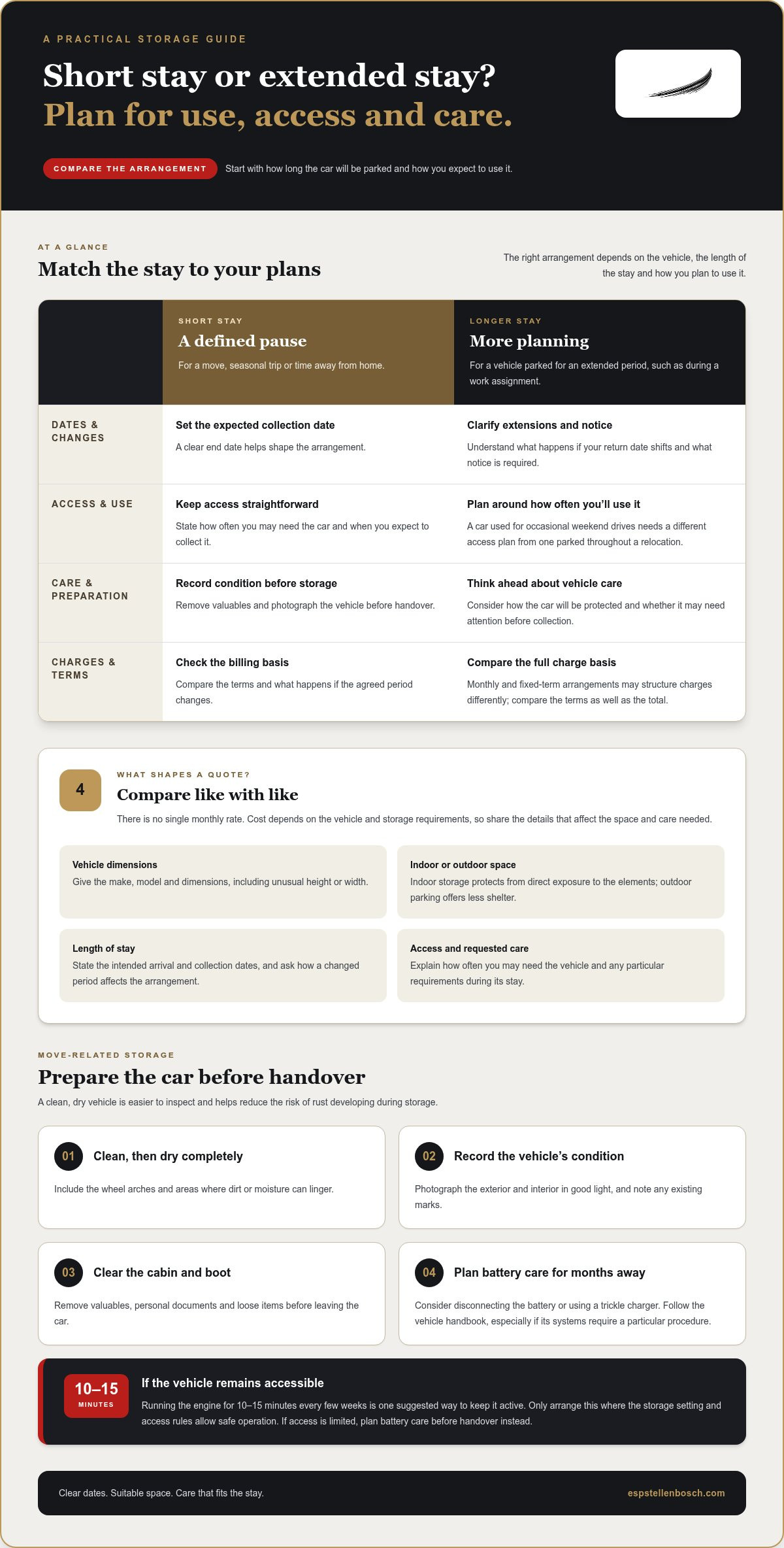
A short stay may cover a move, a seasonal trip or time away from home. A car kept during a house move, for example, may need a clear collection date and straightforward access. A longer stay calls for more planning: consider how often you’ll use the vehicle and what care it needs while parked.
Match the arrangement to your likely schedule. If your return date could shift, understand how an extension works and what notice is required. For a defined stay, such as keeping a second car away during a work assignment, note the expected start and end dates. This gives the arrangement a practical basis, even if plans change.
Compare quotes beyond the headline amount. The cost depends on vehicle dimensions, indoor or outdoor space, length of stay and requested care. Review the billing basis and what happens if the agreed period changes. Monthly and fixed-term arrangements may structure charges differently, so compare the terms as well as the total.
Preparation depends on the length of the stay. Before a short stay, remove valuables and record the vehicle’s condition. For an extended stay, plan how the car will be protected and whether it may need attention before collection. A vehicle left unused through a South African summer faces different conditions from one stored during a brief winter trip.
- Short stay: set the expected collection date and access needs.
- Longer stay: clarify extensions, notice and any care arrangements.
- Either duration: compare the written terms and the full charge basis.
Choose a storage period around the vehicle’s actual use, not just the first date that comes to mind. A car needed for occasional weekend drives requires a different access plan from one parked throughout a relocation. Clear dates and expectations make it easier to assess the right arrangement.
Need to Store Your Vehicle While Moving?
A move between homes can leave a car waiting between collection dates. Prepare it before the removal van arrives rather than rushing through the final handover. A clean, dry vehicle is easier to inspect and helps reduce the risk of rust developing during storage.
Start with a thorough clean, including the wheel arches and areas where dirt or moisture can linger. Dry the car completely, then photograph its exterior and interior in good light. These images provide a clear record of its condition before storage. Remove valuables, personal documents and loose items from the cabin and boot.
Battery care matters during an extended stay. A car that sits unused can return with a drained battery, so consider how long it will remain parked. For storage lasting months, disconnecting the battery or using a trickle charger can help maintain it. Follow the vehicle handbook when handling the battery, especially if its systems require a particular procedure.
For a vehicle that remains accessible, running the engine for 10-15 minutes every few weeks is one suggested way to keep it active. Arrange this only where the storage setting and access rules allow safe operation. If access is limited, plan for the battery before handover instead of relying on occasional starts.
- Before parking: clean and dry the car, then record its condition.
- Before leaving: remove valuables and note any existing marks.
- For a stay lasting months: plan battery care using the handbook’s guidance.
- Before collection: allow time to inspect the vehicle and address any concerns.
Keep the keys, photographs and storage details together during the move. For example, store them with your moving documents rather than in a box set aside for long-term unpacking. If the vehicle needs attention before or after its stay, include that in your care plan. A deliberate handover makes the transition between homes easier to manage.
Indoor and outdoor car storage
Choose indoor or outdoor car storage by weighing shelter, access and the vehicle’s needs. Indoor space shields the car from direct sun, rain, dust and falling debris. Outdoor parking leaves it exposed to local conditions, so consider its paintwork, seals and how often you’ll use it.
For a classic car kept through a season, indoor car storage may better suit a preservation-focused plan. A daily-use vehicle awaiting collection during a move may need convenient access more than enclosed space. Neither option suits every situation. Match the setting to the car’s condition, expected stay and your priorities.
Before choosing a space, compare its dimensions with your vehicle, including roof accessories and fitted racks. A tight fit can make parking and retrieval awkward. For indoor facilities, consider ceiling clearance, turning room and the route to the space. For outdoor parking, assess nearby trees and exposure to the elements.
Where can I find secure car storage near me in South Africa? Search by your town or suburb, then compare distance, access arrangements, indoor or outdoor options, and security measures. Choose a location that fits your vehicle’s dimensions and intended stay.
- Choose indoors when reducing exposure to weather and debris is a priority.
- Choose outdoors when open parking fits your vehicle and practical needs.
- Before deciding, compare dimensions, clearance, access and the surrounding environment.
A covered space still needs to fit the vehicle safely, whilst outdoor parking may suit a car used regularly. Make the decision against your routine, not just the appearance of the space. If indoor car storage is your priority, explore indoor vehicle storage as a next step.
ESP | Exclusive Storage Program: PPF Paint Protection Film
ESP | Exclusive Storage Program offers Secure Indoor Storage and Paint Protection Film (PPF) for owners considering both sheltered parking and paint protection. Indoor storage may suit a vehicle kept off the road during a move, seasonal absence or change in routine. PPF is a separate option for protecting paintwork during regular use.
The right choice depends on how you use and care for your vehicle. A collector’s car that spends time parked may benefit from a considered storage arrangement, while a frequently driven vehicle may call for paint protection. ESP’s Drivers Club and Signature Membership also suit owners looking for vehicle care, concierge support and a community of enthusiasts.
Explore the options at your own pace, then visit ESP | Exclusive Storage Program to discuss your vehicle’s needs.
Choose the right next step for your vehicle
Decide what matters most while your vehicle is away: a sheltered place to keep it, paint protection for regular use, or a closer connection to the automotive community. That priority gives your car storage decision a clearer direction and helps you focus on an arrangement that fits your plans.
ESP | Exclusive Storage Program offers Secure Indoor Storage, Paint Protection Film (PPF), Signature Membership and the Drivers Club. These options address different needs, from a dedicated place for your vehicle to paint protection, ongoing care and community. Choose the option that aligns with how you use and look after your car.
If you’re ready to explore an option for your vehicle, contact ESP | Exclusive Storage Program. Take the next step with care, and choose an arrangement that feels right for your plans.
Frequently Asked Questions
Need an Extra Garage or Parking Bay?
If your home lacks suitable parking, dedicated car storage can keep a vehicle off the street during a renovation, move or extended absence. Decide whether you need frequent access, weather protection or space for a second car. Those priorities help you choose a suitable arrangement. Measure the vehicle, including fitted accessories, before selecting a space.
How do indoor, covered and outdoor car storage compare?
Indoor space encloses the vehicle, covered parking shields it from overhead exposure, and outdoor parking leaves it open to surrounding conditions. A covered bay may suit owners seeking some shelter without an enclosed space. When comparing car storage, weigh the vehicle’s condition, nearby trees, dust and local weather. The site layout also affects access and manoeuvring.
How should I prepare a car for long-term storage?
Before an extended stay, remove loose accessories that could shift or become damaged, and keep the keys and vehicle documents organised separately. Record existing dashboard warnings or maintenance needs for when the car returns to use. Consult the owner’s handbook for model-specific storage guidance, particularly for specialist systems. A clear handover record helps you track the car’s condition.
How often should a stored car be started or maintained?
Follow the vehicle handbook’s maintenance guidance rather than relying on a universal starting interval. Some vehicles require specific procedures after periods of inactivity, and repeated short starts may not suit every model. Arrange checks of the battery, tyres and visible condition according to the car’s requirements. Keep a record to help maintain consistent care throughout the stay.
What are the risks of storing a car long term?
Extended inactivity can contribute to battery discharge, tyre distortion, corrosion around brake components and deterioration of some fluids or seals. Dust, moisture and pests may also affect a vehicle, depending on its surroundings. The car’s age, condition and storage environment shape its needs. Before returning it to regular use, inspect it and address any maintenance concerns.


