

A car collection is more than a line-up of prized vehicles; it is an ongoing responsibility. Car collection management brings together the practical work of organising storage, maintenance, transport, insurance records and the collection’s future direction. A private manager can help keep these moving parts visible and coordinated.
Owning exceptional cars is rewarding, but it also brings a steady stream of decisions, from keeping each vehicle’s records organised to deciding what belongs in the collection next. Good oversight gives those details a clear place without taking the personal passion out of ownership.
This guide explains what car collection management can involve, how storage security and vehicle care fit into the picture, and what to consider as a collection grows. It also covers tracking vehicles across locations and keeping insurance information organised, so you can see how thoughtful stewardship supports both the cars and the experience of owning them.
Key Takeaways
- A private collection manager coordinates specialist services and keeps vehicle care, transport and documentation organised.
- A well-planned garage supports safer storage and makes each car easier to access and monitor.
- Set a clear direction for collection growth, then build maintenance and regular use into each vehicle’s care plan.
- Keep a current record of each car’s location and insurance details; indoor storage and paint protection can support its preservation.
What does a private car collection manager do?
A private manager coordinates the practical work around each vehicle, from specialist servicing to transport and records. Whether it is a classic car or a modern supercar, the role is to turn individual tasks into a clear care plan.
Vehicle records and service alerts
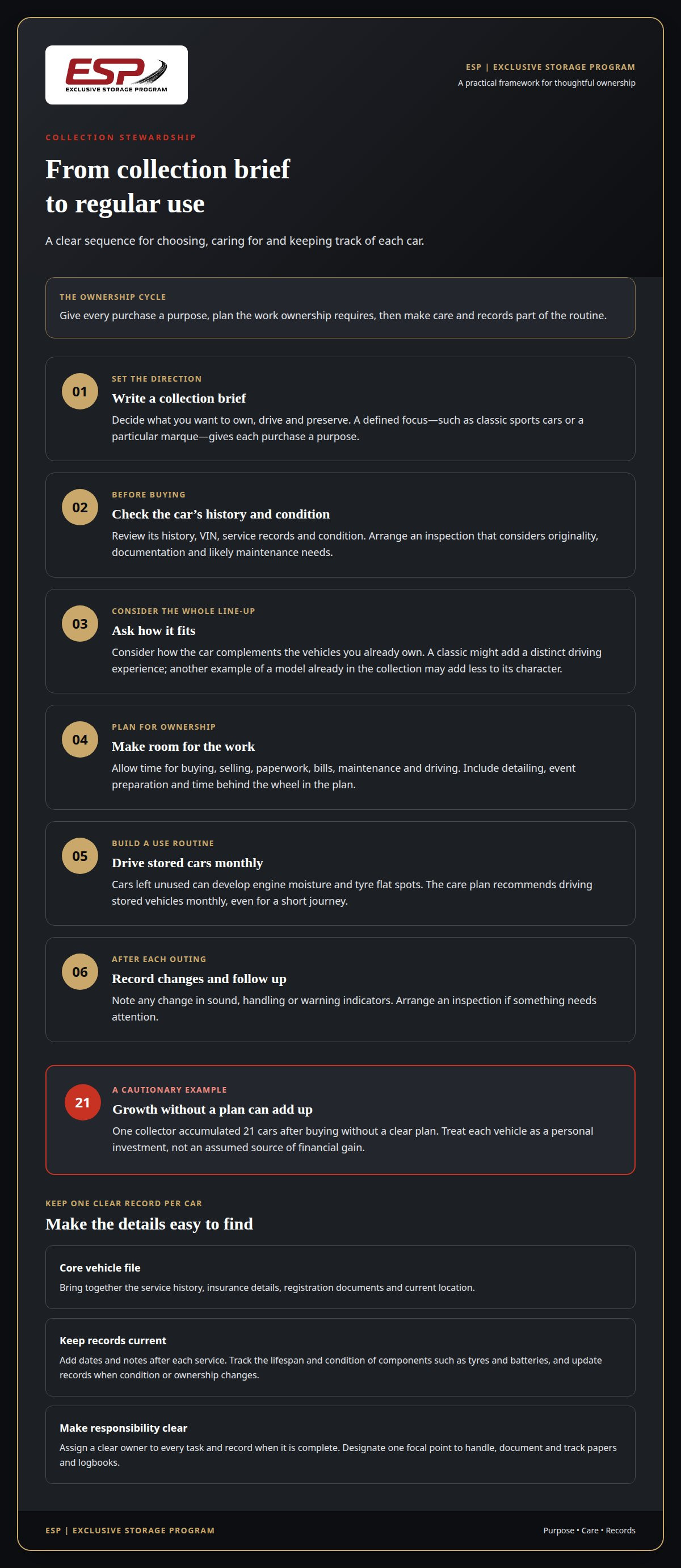
One organised record for each car should bring together service history, insurance details, registration documents and current location. Add dates and notes after each service, then record the lifespan and condition of components such as tyres and batteries. This makes upcoming work easier to spot. For documentary evidence such as papers and logbooks, the International, Impartial and Independent Mechanism advises designating one focal point to handle, document and track it.
A manager can also coordinate specialist services. A classic car may need marque-specific expertise, while a luxury supercar may require suitable transport to a workshop. Set service reminders according to each vehicle’s history and component condition, rather than relying only on generic alerts.
In-house or specialist management
Manage a collection yourself if you have the time, knowledge and reliable records to coordinate each car’s needs. Specialist support can help when you need to organise care, storage or vehicle handovers across a collection. The right approach depends on the collection’s complexity and how much coordination you want to handle personally.
For example, a collector restoring a classic car might arrange specialist servicing directly and delegate transport and appointment scheduling. Services for supercar collections can also coordinate care around each vehicle’s requirements. Whichever approach you take, assign a clear owner to every task and record when it is complete.
Management costs and collection planning
In South Africa, software and professional management costs depend on the tools or support required. Professional fees are given after a quote request and depend on factors such as the number of vehicles, locations and coordination involved. Track each car’s value alongside maintenance, insurance and document records, updating entries when its condition or ownership changes.
Tax, estate planning and resale decisions are tied to ownership, purchase and sale records, as well as the collection’s intended future. Keep invoices, service history and registration documents together for each vehicle, then review them when planning a sale or estate transfer. For a classic car, a complete service file can help explain its care history to a prospective buyer.
Garage organisation and security
A well-arranged garage makes each vehicle easier to access, inspect and prepare for driving. Give every car a designated bay, then keep keys, chargers and care equipment in labelled, secure places. A simple floor plan helps household members or event staff locate the right vehicle without moving others unnecessarily.
Start security planning with the garage itself. Check that doors close securely, access is controlled and entry points are well lit. Keep track of who holds the keys, and log visitors and vehicle movements. If cars are displayed at events, agree in advance who may access the garage and authorise a vehicle’s removal.
Good organisation also helps protect a car’s history. Store each vehicle’s paperwork, service records and photographs in a consistent file, separate from the keys. Record where spare keys are kept and note any change in a car’s location. These steps make it easier to spot a missing vehicle or document.
Digital records need safeguards too. Use individual accounts instead of shared passwords, limit access to those who need it, and encrypt files during storage and transfer. Keep a separate backup of essential records. Information about a car’s location, value or ownership should not be openly accessible to every garage visitor.
Match the garage layout to your collection’s routine. Leave clear paths around vehicles for inspection and cleaning, and position frequently driven cars where they can leave without disturbing others. Keep care supplies away from paperwork, and return tools to a marked place after use. An orderly space makes it easier to care for the cars without unnecessary handling.
For a collection that needs a dedicated indoor setting, secure indoor storage can help bring vehicle protection and garage organisation together.
Building and maintaining a collection
Begin with a collection brief: what you want to own, drive and preserve. A defined focus, such as classic sports cars or a particular marque, gives each purchase a purpose. Without one, a collection can grow through attractive opportunities rather than considered choices. One collector accumulated 21 cars after buying without a clear plan. Treat each vehicle as a personal investment, not an assumed source of financial gain.
Before buying, review the vehicle’s history, VIN, service records and condition. Arrange an inspection that considers originality, documentation and likely maintenance needs. Then consider how the car fits with the vehicles you already own. A classic might add a distinct driving experience, while another example of a model already in the collection may add less to its character.
Plan the time needed for ownership as carefully as purchase decisions. Collectors need time for buying, selling, paperwork, bills, maintenance and driving. A manager can help set priorities, coordinate appointments and align each car’s care with its intended use. Allow time for detailing, event preparation and driving stored vehicles, too.
Cars left unused can develop engine moisture and tyre flat spots. Build regular driving into the care plan, with stored vehicles driven monthly, even for a short journey. A manager’s weekly schedule can organise which cars are driven and when. After each outing, note any change in sound, handling or warning indicators, then arrange an inspection if something needs attention.
Between drives, record whether each battery is charged, the tyres are inflated, and the oil is in suitable condition. These checks create a practical maintenance routine instead of relying on memory. Review the collection plan when ownership priorities change, keeping future purchases, ongoing care and the time each vehicle receives connected to why you collect.
Collection reports, locations, and insurance tracking
A collection report gives you a current view of each vehicle and its location. Create an entry for every car, noting its condition, last movement, insurance details and relevant paperwork. When a vehicle moves between a home garage, storage and an event, update the entry at each handover. This routine helps distinguish a planned transfer from an unexpected absence.
Make transport part of the record. Note the pick-up point, destination, date, person coordinating the move and the vehicle’s condition before and after arrival. When arranging a storage handover, record who is responsible at each stage. A movement log makes arrangements easier to follow, particularly when cars are kept in different places.
Keep insurance information with each vehicle’s identifying details, while limiting access to sensitive records. Record the insurer, policy reference, renewal date and vehicle covered. If the car’s location or use changes, note it and include the change in your regular policy review. This creates a prompt to assess whether the existing cover still reflects the car’s circumstances.
Use a consistent report format so changes stand out. Record the car’s condition before transport, any new marks after arrival and who received the keys. Attach dated photographs to document visible changes. Link paperwork to the relevant vehicle rather than keeping it in a general folder where ownership or insurance documents could be confused. A concise report also provides a practical handover record for an estate manager or household assistant.
For help arranging a suitable vehicle location, explore secure storage options as part of your collection plan.
ESP | Exclusive Storage Program: PPF Paint Protection Film
ESP | Exclusive Storage Program offers Paint Protection Film (PPF) for owners seeking a considered approach to vehicle preservation. It can complement Secure Indoor Storage and Premium Vehicle Care, bringing protection, storage and ongoing care into one collection plan.
Choose support that matches your priorities. Paint Protection Film helps protect a vehicle’s finish, while Secure Indoor Storage provides a dedicated indoor setting. Drivers Club and Signature Membership offer further ways to enjoy the programme. Each option can play a different role, whether you are preparing a car for storage or shaping your collection’s care.
For an introduction to ESP’s vehicle care and storage, visit espstellenbosch.com.
Shape the next chapter of your collection
The next decision is how you want each car to fit into your life, not simply where it sits. Thoughtful car collection management can give you more room to enjoy your vehicles while making their care part of a deliberate ownership routine. Start with the support that best matches your priorities, whether that means protecting the finish, arranging indoor storage or connecting with a community of motoring enthusiasts.
ESP | Exclusive Storage Program offers Paint Protection Film (PPF), Secure Indoor Storage and Drivers Club. These services support different parts of the ownership experience, from protecting a vehicle’s finish to providing dedicated indoor storage and a community of fellow enthusiasts. Start with what best serves your cars and the way you intend to enjoy them.
Contact ESP | Exclusive Storage Program to explore a considered next step for your collection. Every great collection has its own character; give yours the care and attention to keep that spirit alive.
Frequently Asked Questions
Storage - where to put your vehicles?
Choose storage that suits each car’s condition, use and preservation needs. A regularly driven vehicle may need convenient access, while a rarely used classic may benefit from dedicated indoor storage. ESP | Exclusive Storage Program offers Secure Indoor Storage for high-end and collector cars. Before choosing a space, consider access arrangements, the car’s protection needs and how easily it can be prepared for its next outing.
What is car collection management and what services does it include?
Car collection management coordinates the decisions and practical tasks involved in owning several vehicles. Depending on the owner’s needs, this can include arranging specialist servicing, transport, storage, care appointments and documentation. For example, a manager might coordinate a workshop visit around a planned event, then record the handover. The aim is to make responsibilities clear and keep ownership organised without losing the enjoyment of the cars.
What records and tools are needed to manage a classic or luxury car collection?
Keep a separate digital or paper file for each car, supported by a master inventory. Give each file a consistent vehicle identifier, then organise documents by type so service invoices and ownership papers are easy to find. A shared calendar can flag upcoming commitments, while access controls help protect sensitive details. Keep a backup and note who is responsible for updating each record.
How should collectors schedule servicing, storage and vehicle use?
Build the schedule around each vehicle’s condition, use and manufacturer-recommended service intervals. Add planned outings, storage arrangements and preparation tasks to one calendar, then assign someone to each booking. For example, a car selected for an event may need transport coordinated with a service appointment. Review the plan after a change in use, a new inspection finding or an extended period off the road.
How can collectors protect cars from theft, fire, humidity and deterioration?
Use layered precautions: controlled access, secure key handling, suitable indoor storage and an orderly garage that keeps cars clear of unnecessary hazards. Review fire precautions for the building and keep the relevant equipment accessible. To manage humidity and deterioration, monitor the storage environment and inspect each car for changes. A dated condition photograph after storage or transport can help reveal marks or changes that need attention.


