

Protecting a luxury car’s resale value is less about one costly upgrade and more about consistent, considered care. To maintain the resale value of a luxury car, keep its service and repair records, preserve its condition, choose suitable replacement parts and think carefully before making modifications. These steps help prospective buyers understand how the vehicle has been cared for.
It’s natural to want a car you enjoy today to remain appealing when it’s time to sell. A clear maintenance history and a well-kept finish can support buyer confidence, while excessive or highly personal changes may narrow the car’s appeal. This guide explores how servicing, mileage, accident history, repairs and modifications can affect resale value, with practical ways to make thoughtful decisions.
Key Takeaways
- Keep a complete record of servicing, diagnostics and repairs to make the car’s care easier for a future buyer to assess.
- Look beyond mileage: paintwork, cabin condition, accident history and mechanical performance all shape buyer appeal.
- Choose quality replacement parts and repairs that preserve the vehicle’s original condition and reliability.
- Before modifying the car, consider whether the change is reversible and likely to suit a broad range of buyers.
1. Regular servicing and maintenance records
A consistent service history helps maintain the resale value of a luxury car by making its care easier to assess. Follow the maintenance schedule in the owner’s handbook rather than relying on memory or appearance. Record each scheduled service alongside its date and odometer reading. A complete history helps prospective buyers understand how the vehicle was maintained over time.
In South Africa, a private sale, trade-in and dealer consignment each suit different priorities. A private sale gives you direct control over the asking price and buyer discussions. A trade-in combines the sale with another vehicle purchase, while consignment places the sale process with a dealership. Compare the convenience, control and paperwork involved in each route before deciding.
How often should a luxury car be serviced to preserve resale value? Follow the schedule set by its manufacturer, including any distance or time intervals in the owner’s handbook. Keep each service appointment on schedule and record additional work between visits. Requirements differ between models, so a generic interval may not suit your car.
Build one clear file, on paper or digitally. Include the service book, diagnostic reports, repair invoices, parts-replacement details and warranty-work records. Ask for each invoice to specify the work completed and parts fitted. Store records in date order and match them to odometer readings. This makes it easier to show a buyer what was done and when. Keep records of routine work too, such as a battery replacement or software-related diagnostic visit.
Maintenance records document care, but they do not certify the vehicle’s present condition. Keep that distinction clear when describing its history. Luxury vehicles typically depreciate faster than standard cars, so timing matters too. New-car discounts can make a used model less attractive by changing the comparison for buyers. Model updates can also shift attention towards newer designs or features. Selling before an update may help preserve interest, while a complete service file supports confidence at any point in the ownership cycle.
2. Vehicle condition, mileage and accident history
Buyers assess a luxury car as a whole, not by its odometer alone. They consider paint quality, cabin wear, accident history and mechanical performance alongside mileage. A carefully maintained vehicle with higher mileage can appear more appealing than a neglected, low-mileage example. Keep use proportionate to your needs and drive smoothly to limit avoidable strain on brakes, tyres and suspension.
Manage mileage with a little planning. Combine errands where practical, avoid unnecessary journeys and choose alternative transport when it suits your routine. Record the odometer at each service and keep invoices for replaced tyres or other wear items. This context helps a buyer understand how the car was used, rather than viewing mileage as an isolated figure.
For a South African sale, keep registration and ownership paperwork together with the vehicle’s roadworthy information. Roadworthy and transfer requirements depend on the transaction, so establish the applicable steps before completing the sale. Accurate documents help connect the car with its condition and ownership history.
How much do accident history, repairs and modifications reduce resale value? There’s no single reduction that applies to every car. The effect depends on the extent and location of the damage, repair quality, supporting records and how closely modifications preserve the original specification. A documented repair gives buyers a clearer account than unexplained damage or incomplete information.
Before sale, address visible concerns methodically. Wash and detail the exterior, clean the cabin, protect interior surfaces from UV exposure, and attend to warning lights, leaks, vibrations or suspension noises. Check paintwork in good light and remove personal items from storage areas. A focused preparation can make condition easier to assess without disguising previous damage. For considered presentation and ongoing upkeep, explore premium vehicle care as part of your sale preparation.
Service history and maintenance records can further round out that picture, while regular washing, waxing and detailing help maintain the interior and exterior and prevent wear and tear.
3. Choosing quality parts and professional repairs
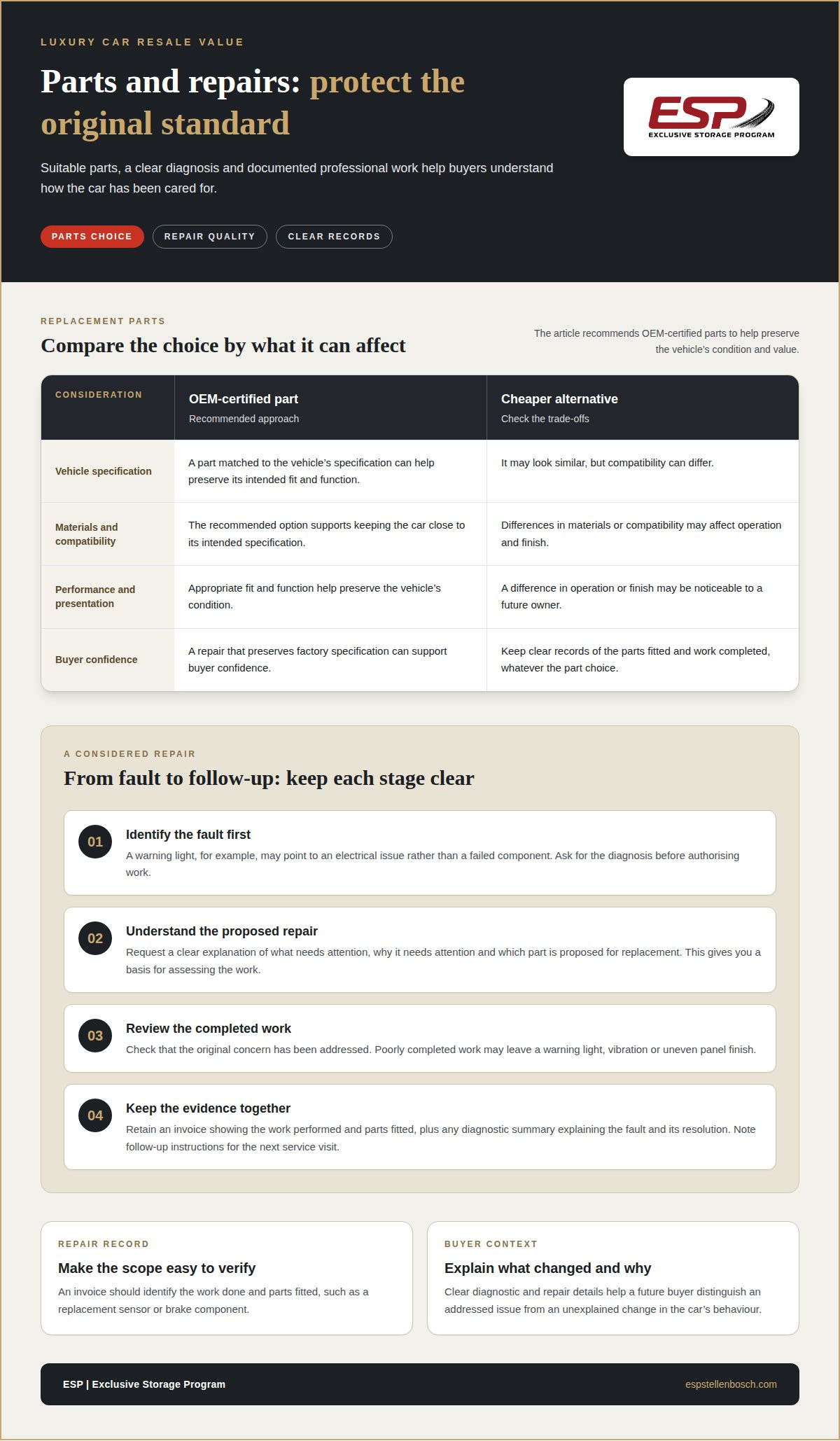
A replacement part can affect how a luxury car performs, feels and presents to its next owner. Using OEM-certified replacement parts is recommended for protecting its condition and value. For example, a component matched to the vehicle’s specification helps preserve the intended fit and function. A cheaper alternative may appear similar, yet differences in materials or compatibility can affect operation and finish.
Start by identifying the exact fault before authorising work. A warning light, for instance, may point to an electrical issue rather than a failed component. Ask for a clear explanation of the diagnosis and proposed repair, including which part needs attention and why. This helps prevent unnecessary replacements and gives you a better basis for assessing the completed work.
Repair quality matters as much as the part itself. Work on a luxury vehicle can involve connected systems, such as sensors, suspension and electronic controls. A poorly completed repair may leave a warning light, vibration or uneven panel finish. After the work, review the invoice and confirm that the original concern has been addressed. Note any follow-up instructions for the next service visit.
Keep a clear record of the repair’s scope. An invoice should identify the work performed and the parts fitted, such as a replacement sensor or brake component. Retain any diagnostic summary that explains the fault and its resolution. These details help a future buyer distinguish a properly addressed issue from an unexplained change in the car’s behaviour.
Before approving a repair, weigh the vehicle’s age, condition and intended use against the proposed solution. For a high-value model, preserving factory specification can support buyer confidence. Avoid choosing a part on price alone; compare its suitability, expected function and the quality of the repair process. Thoughtful decisions now can help keep the car consistent, reliable and easier to evaluate later.
Buyers consider a car’s service history, condition, paint quality, mileage, accident history, maintenance records and mechanical performance. Following a regular maintenance schedule supports reliability and can help extend component life. Preventive diagnostics may also help identify issues before they lead to more extensive repairs.
4. Aftermarket changes that may reduce resale appeal
Luxury-car buyers often value a specification close to the manufacturer’s original design. An aftermarket exhaust, engine modification or body kit can narrow appeal, especially if it changes the car’s sound, performance or appearance. A heavily altered BMW, for example, may suit its current owner’s taste but feel less suitable to buyers seeking an unmodified car.
Which luxury car brands and models hold their resale value best in South Africa? No single ranking applies across every model year and variant. Buyers weigh condition, mileage, specification, service history and demand for the particular model.
Before approving an upgrade, consider whether it can be reversed and whether the original parts can be retained. A removable trim change is easier to undo than an engine tune or altered bodywork. Keep invoices and document the work, including the parts fitted and any changes to the vehicle’s original specification.
Aftermarket upgrades can also raise questions about reliability. An engine modification may affect how the car drives, while a non-standard exhaust could alter its character. Buyers may want to know who completed the work and whether factory components remain available. If an upgrade offers no clear benefit beyond personal preference, leaving the car in standard form may preserve broader appeal.
How do South African luxury-car resale prices compare with trade-in values and online valuations? A private asking price reflects the seller’s expectation, while a trade-in offer reflects the dealer’s assessment of the vehicle and its resale prospects. Online valuations estimate value from the details entered, but condition, records and specification can affect an in-person appraisal.
Review each proposed change against the likely priorities of a future buyer. Retain original components, record modifications accurately and avoid upgrades that compromise the car’s factory character. A restrained approach keeps the vehicle easier to assess and may appeal to a wider range of prospective buyers.
ESP | Exclusive Storage Program: PPF Paint Protection Film
ESP | Exclusive Storage Program offers Paint Protection Film (PPF) to help preserve a luxury car’s original paintwork. For owners who drive regularly, PPF can provide a protective layer against stone chips, scratches and environmental damage, helping maintain the finish. It is a considered option when preserving the car’s appearance matters.
Pairing paint protection with careful upkeep supports a broader approach to preserving your car. Secure Indoor Storage is another way to care for a vehicle when it is not in use. The right choice depends on how you use and store your car, and which aspects of its condition matter most to you.
If you’re considering Paint Protection Film or Secure Indoor Storage for your vehicle, contact ESP | Exclusive Storage Program to discuss your needs.
Make your next care decision count
Choose your next step based on how you use and care for your vehicle. If it spends long periods off the road, storage may be the priority. If its finish faces regular road exposure, paint protection may better suit your plans. A considered approach helps maintain the resale value of a luxury car without adding changes that may not serve its future owner.
ESP | Exclusive Storage Program offers Paint Protection Film, Secure Indoor Storage and Drivers Club. Each supports a different part of ownership, from protecting the finish to caring for the vehicle between drives and connecting with fellow enthusiasts. Consider which need matters most for your car, then make a plan for its longer-term care.
Contact ESP | Exclusive Storage Program to explore a considered care option for your vehicle. Thoughtful stewardship today can help keep your car ready for the next chapter.
Frequently Asked Questions
Why Maximise Resale Value?
Protecting resale value preserves more options when your ownership plans change. You may put the proceeds towards another vehicle, keep the car longer or negotiate a future purchase from a stronger position. The aim isn’t to prevent depreciation, but to limit avoidable loss through considered care. A realistic view of value also helps you decide whether an upgrade or repair makes sense.
How do mileage, age and condition affect a luxury car’s resale value in South Africa?
Mileage and age matter most when considered alongside the car’s exact model, variant and use. For example, two vehicles with similar odometer readings may show different wear if one has mainly covered long journeys and the other frequent stop-start trips. Compare like with like, including specification and visible wear. This gives a more useful picture than judging a luxury car by age or mileage alone.
Do full service records and a manufacturer service plan increase a luxury car’s resale price?
Full service records can support buyer confidence by showing a consistent care history. A manufacturer service plan may also appeal if it remains active and its terms allow the next owner to benefit. Present the plan documents alongside the service file, making any remaining coverage and conditions clear. Neither item sets the selling price: the car’s specification, condition and buyer demand still matter.


