

A car can start and still be unready for the road. To keep a stored car road ready, prepare its battery, clean and protect its surfaces, and check the engine oil, other fluids and fuel before storage. When it’s time to drive again, inspect the tyres, look for leaks or visible damage, and test the brakes before setting off.
Leaving a cherished car unused takes more than covering it and turning the key months later. A little preparation helps you return to it with a clearer picture of its condition and the checks it needs.
This guide explains how to prepare the battery, paintwork and interior, engine oil, coolant, brake fluid and fuel for storage. It also covers the checks to make before driving again, from tyre condition to a cautious first journey. A considered routine can help your car make a more confident return to the road.
Key Takeaways
- Choose a battery-storage approach that suits how long the car will be unused, and keep its charge in mind.
- Clean and dry the car before storage, then prepare its paintwork and interior to help protect them while it rests.
- Review the engine oil and essential fluid levels before storage, and decide whether the fuel needs stabilising.
- Before driving again, inspect the car for signs of damage or leaks and make a careful return to the road.
Battery care during storage
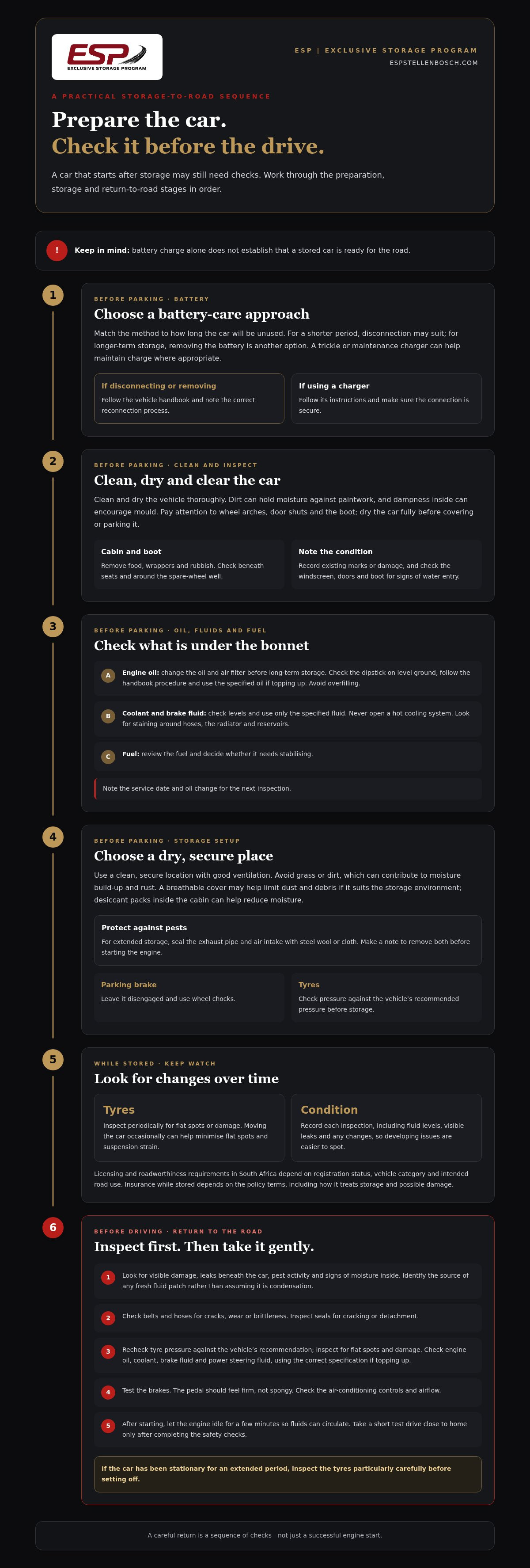
A stored car’s battery can lose charge while the vehicle sits unused. Before parking, choose a care method suited to the storage period: disconnect the battery or use a trickle charger to help maintain its charge. For longer-term storage, removing the battery is another option to help prevent battery failure. For a shorter period, disconnection may be suitable. Follow the vehicle handbook when handling battery connections.
A maintenance charger can also help care for the battery during storage, where appropriate. Use it according to its instructions and make sure the connection is secure. If you disconnect or remove the battery, note the correct reconnection process for that vehicle. A car that starts after storage still needs other checks before it is driven. Battery charge alone doesn’t establish that it’s road ready.
In South Africa, vehicle licensing and roadworthiness requirements depend on the car’s registration status, category and intended road use. Insurance cover while stored depends on the policy terms, including how it treats storage and possible damage. Review these alongside the car’s condition before returning it to the road.
There’s no single cost for keeping a stored car roadworthy and insured. The total depends on its battery needs, licensing position, insurance cover and any maintenance required after storage. For example, a battery that needs replacing affects upkeep costs, while the vehicle and policy details shape insurance costs.
No single start-and-drive schedule suits every stored car. Battery condition, storage duration and the vehicle’s needs all affect the decision. Starting the engine isn’t a substitute for a proper journey or a full inspection. After starting, let the engine idle for a few minutes so fluids can circulate, then take a short test drive only after completing safety checks.
Check tyre pressure before storage and again before driving, and compare it with the vehicle’s recommended pressure. During storage, inspect the tyres periodically for flat spots or damage. Moving the car occasionally can help minimise flat spots and suspension strain. If it has been stationary for an extended period, inspect the tyres carefully before setting off.
Cleaning and inspecting the vehicle
Before long-term storage, clean and dry the car thoroughly. Dirt on the paintwork can hold moisture against the surface, while dampness inside the cabin can encourage mould. Pay attention to exposed areas such as the wheel arches, door shuts and boot. Dry the vehicle fully before covering or parking it, rather than trapping moisture beneath a cover.
Prepare the interior with the same care. Remove food, wrappers and rubbish from the cabin, boot and storage compartments. Crumbs and food odours can attract pests, while a clear interior makes later inspections easier. Check beneath the seats and around the spare-wheel well, where forgotten items can remain hidden.
Before parking, inspect the car’s exterior and cabin, noting existing marks or damage. Check around the windscreen, doors and boot for signs of water entry. Choose a dry, clean, secure location with good ventilation, and avoid grass or dirt, which can contribute to moisture build-up and rust. A breathable cover can help limit dust and debris if it suits the storage environment. Desiccant packs inside the cabin can help reduce moisture that may lead to mould or mildew.
To deter pests during extended storage, seal the exhaust pipe and air intake with steel wool or cloth. Make a note to remove both before starting the engine, and don’t leave material in either opening when the car returns to use. A careful inspection helps keep a stored car road ready by catching damage before it worsens.
After storage, inspect the vehicle before turning the key. Look for visible damage, leaks beneath the car, pest activity and signs of moisture inside. Check belts and hoses for cracks, wear or brittleness; deteriorated components need attention before driving. If you find a fresh fluid patch, identify its source rather than assuming it is routine condensation. These checks help keep a stored car road ready when it’s time to drive again.
Careful cleaning and inspection can form part of premium vehicle care, particularly when a car needs considered preparation before storage or use. Record any changes between inspections, so developing issues are easier to spot.
Engine oil and fluid preparation
Before long-term storage, change the engine oil and air filter. Old oil can contain contaminants, so changing it removes them before the car rests. Check the dipstick on level ground, following the handbook procedure. If the level is low, top up with the specified oil and avoid overfilling. Note the service date and oil change for the next inspection.
Check coolant and brake fluid before parking. Use the vehicle handbook to locate each reservoir and identify its markings. Top up only with the specified fluid, and never open a hot cooling system. Look for staining around hoses, the radiator and the fluid reservoirs. A falling level or fresh residue may point to a leak that needs attention before storage.
After storage, check the engine oil, coolant, brake fluid and power steering fluid levels. Top up if needed, using the correct specification for that vehicle. Compare the dipstick reading with its marked range, and look beneath the car for fresh drips. Fluid that looks unusually dark or contaminated needs closer assessment before driving.
Long-term parking also calls for care around the brakes, rubber seals and air conditioning. Leave the parking brake disengaged and use wheel chocks. Inspect seals for cracking or detachment, then test the air-conditioning controls and airflow after storage.
Before driving, inspect for leaks, visible damage and signs of pests. Check belts and hoses for cracks, wear or brittleness. Inspect the tyres for pressure, flat spots and damage, then test the brakes. The pedal should feel firm, not spongy. After starting, let the engine idle for a few minutes so fluids can circulate, then take a short test drive close to home.
Keep a simple record of each inspection, including fluid levels, visible leaks and any changes in brake-pedal feel. This gives you a useful comparison at the next check. If a warning light appears, a fluid level drops or a belt looks brittle, resolve the issue before relying on the vehicle for a longer journey.
Fuel tank and fuel stabiliser
For extended storage, filling the fuel tank can help reduce condensation inside it. You can also consider a fuel stabiliser, particularly if the car will remain unused for a prolonged period. Add it before storage, following the product label for correct application. Stabiliser helps prevent fuel breakdown and damage to the fuel system, but it won’t restore fuel that has already deteriorated.
Use a stabiliser intended for the vehicle’s fuel, and follow its directions rather than estimating the amount. The product label explains how much to use and how to add it. Keep the container and instructions available for reference. A stabiliser is preventative, not a substitute for inspecting the fuel system or replacing fuel that has degraded.
Fuel preparation depends on how long the car will stand and the condition of the fuel already in its tank. For extended storage, a full tank can reduce condensation, while stabiliser can help limit fuel deterioration. These steps support preservation, but neither removes the need to assess old fuel before starting a car that has been stored for a very long time.
After very long storage, old fuel can be drained and replaced with fresh fuel. This is separate from adding stabiliser before storage. If the car has been unused for a prolonged period, assess the fuel before relying on the engine to start and run normally.
Fuel preparation doesn’t replace fluid checks. Before driving after storage, check the engine oil, coolant, brake fluid and power steering fluid levels, then top up if needed. Use the vehicle handbook to identify the correct fluids. Look for leaks around the engine bay and beneath the car. A fresh patch on the ground can indicate a problem that needs attention before driving.
For a considered storage arrangement, explore secure indoor storage as part of protecting a vehicle during an extended period off the road.
ESP | Exclusive Storage Program: PPF Paint Protection Film
ESP | Exclusive Storage Program offers Paint Protection Film (PPF) for owners seeking added care for their vehicle’s paintwork. It can be a considered step before storage, particularly when preserving the exterior finish matters alongside battery, fluid and fuel preparation.
For a vehicle that will remain off the road, ESP’s Secure Indoor Storage provides a dedicated setting for preservation. Premium Vehicle Care can complement your cleaning and inspection routine. The right next step depends on whether your priority is paint protection, storage or ongoing care.
To explore PPF Paint Protection Film or discuss a suitable storage option, contact ESP | Exclusive Storage Program for a considered conversation.
Make your next drive part of the plan
Storage is easier to manage when it has a clear purpose: preserving a car until you’re ready to enjoy it again. Decide what level of protection suits the vehicle and how you want to care for it over time. That intention can guide your choice between practical preparation at home and a more considered storage arrangement.
To keep a stored car road ready, think beyond the time it spends parked. ESP | Exclusive Storage Program offers Paint Protection Film (PPF) and Secure Indoor Storage, alongside its Drivers Club. These options help owners give their vehicle’s preservation and continued enjoyment thoughtful attention.
If you’re considering a suitable next step for your car, contact ESP | Exclusive Storage Program to start a conversation. A little foresight now can help make the return to the road feel more rewarding.
Frequently Asked Questions
What battery maintenance or trickle charger is best for a stored car?
Choose a maintenance charger compatible with the car’s battery and electrical system, rather than selecting one by brand alone. Check the vehicle handbook and charger instructions before connecting it. A charger designed to maintain charge serves a different purpose from rapid charging. For a vehicle with unusual electrical requirements, the handbook’s battery guidance is the best starting point.
How can you prevent rust, mould and pest damage to a stored car?
Before storage, check paint chips and exposed metal, especially around door edges and wheel arches. Keep cabin textiles dry and inspect beneath mats and inside the boot for dampness. Before starting the car again, look for nesting material or gnaw marks around wiring and upholstery. These targeted checks can reveal problems beyond the visible bodywork.
How often should you start and drive a stored car to keep it road ready?
There’s no single start-and-drive schedule: battery condition, storage duration and the car’s needs all matter. After completing safety checks, let the engine idle for a few minutes, then take a short test drive close to home.


